
Computing and data science.

The BIFI is one of the most relevant e-science centers in Spain, both as resource providers and for scientific users. Composed mainly by engineers and physicists, the Computing & Data Science Area includes a wide range of activities such as technological research, user support, applied research, technology transfer and/or dissemination.
The BIFI houses the Aragón Supercomputing Center (Cesar), a computing infrastructure that encompasses a wide range of technologies: HPC (distributed and shared memory), grid, cloud, voluntary computing and dedicated computers.
The Computing & Data Science Area is structured in five research lines:
- Citizen Science
- Data Analysis, Advanced Visualization and Technology Transfer
- High Performance Computing and Cloud Computing (HPC-Cloud)
- Special Purpose Computers
- Digital Science
- Stochastic models and data analysis in Medicine and Climatology
- Kampal Data Solutions spin-off
HPC computing resources offer several million hours of CPU and hundreds of terabytes of storage per year, to BIFI researchers (and their collaborators) and external users through the Spanish Supercomputing Network, the Hosted Clusters program and other services provided.
Cloud infrastructures also provide computing resources for a wide range of researches, which have specific or complementary requirements to those offered by HPC infrastructures. In addition to this, they also serve as a test bed for Spanish and European companies and SMEs, which are willing to adopt these technologies to improve their business model. Therefore, in recent years, we have focused our research and cloud infrastructures to help SMEs on how to take advantage of these powerful technologies.
In the research line of special purpose computers, we work on the design and construction of machines dedicated to solve very specific problems, like the awarded supercomputer JANUS, based on FPGAs and with relevant scientific results published.
The BIFI is an international benchmark in citizen science activities: it led the first volunteer computing project developed in Spain, called ‘Zivis’ (later ‘Ibercivis’, prior to the establishment of the Ibercivis Foundation), and coordinated the European project Socientize (2012–2014), funded under the 7th European Framework Programme within the Research Infrastructures program.
The Socientize project compiled activities, institutions, funding programs, and initiatives related to active citizen participation in science. Since then, citizen science activities—the majority of which are developed with the collaboration or support of the Ibercivis Foundation—have diversified beyond online technologies.
- Citizen Science
- Data analysis, advanced visualization and software development
- High Performance Computing and Cloud Computing (HPC- Cloud)
- Special Purpose Computers
- Digital Science
- Stochastic models and data analysis in Medicine and Climatology
- Kampal Data Solutions
Citizen Science
Head of the Research Line:
Francisco Sanz García
Researchers:
Francisco Sanz García
Fermín Serrano Sanz
Maite Pelacho
Jorge Barba
Lucía Moreno
Olga Varela Machado
Judith Bielsa
Alba Peiro
Nacho Sáez
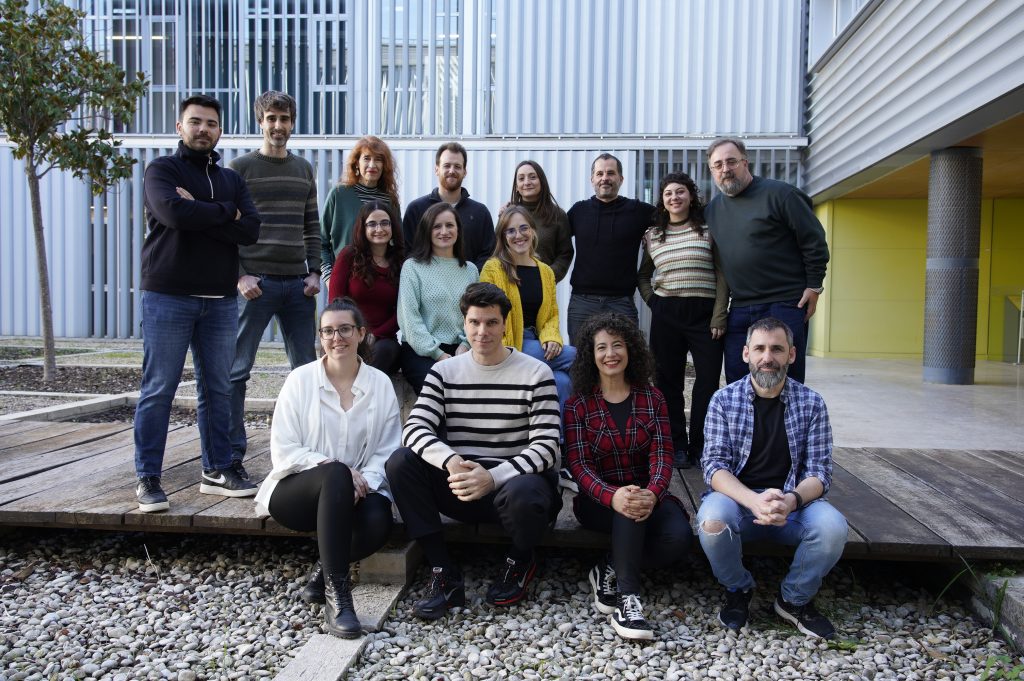
The entire Ibercivis team is made up of professionals from various fields, including the following: mathematics, computing, software development, philosophy, physics, engineering (computer, electronic, environmental), geology, sociology, psychology, political science, graphic design, and communication.
SUMMARY OF THE RESEARCH LINE
Citizen science can be defined as a set of research methodologies in which anyone interested can actively participate in one or more stages of the research cycle—identifying research questions, proposing hypotheses, developing new methodologies, contributing and/or analysing data, interpreting results, communicating them—in accordance with their ever-changing abilities. The areas of study and methodologies are very diverse, as are the possibilities for collaboration.
In Spain, the Ibercivis Foundation is a leader in promoting citizen science on a national scale, also developing its activity in local and international spheres. Ibercivis is a non-profit foundation dedicated to citizen science, legally established in 2011, with its origins in the BIFI at the University of Zaragoza in 2006, when they designed and developed the first voluntary distributed computing projects in Spain. The entities that make up the foundation’s current board of trustees are the Ministry of Science, Innovation and Universities, the Government of Aragon, the Spanish National Research Council (CSIC), the University of Zaragoza, the Centre for Energy, Environmental and Technological Research (Ciemat), and the Zaragoza City of Knowledge Foundation (ZCC).
A milestone in citizen science, both in Europe and internationally, was the development of the European project Socientize (2012–2014), led by BIFI and Ibercivis, including the publication of the White Paper on Citizen Science for Europe, a reference document for the understanding and development of citizen science on an international scale, particularly in its policy dimensions. Since 2012, the activity of Ibercivis and BIFI in citizen science has diversified beyond volunteer computing, and both entities continue to collaborate on various research projects.
Ibercivis’ triple mission can be summarised as follows:
- to promote research through citizen science methodologies;
- to support and promote citizen science initiatives at local, national and international level;
- to explore citizen science itself as a subject of study.
Based on this mission, Ibercivis organises its activities along several complementary lines. On the one hand, it promotes multidisciplinary approaches and the development of open-source technologies that are accessible, adaptable and replicable, as well as specific tools (e.g., applications and web platforms) designed for data collection and analysis. In addition, it promotes technologies that enable individuals and communities to design and develop their own projects, encouraging more autonomous and diversified participation.
Another central line of activity is training, capacity building and strengthening. Ibercivis produces training materials in various formats aimed at both professional researchers seeking to incorporate citizen science methodologies and anyone interested in actively participating in research, in close collaboration with entities from the public sector, the third sector (associations, NGOs, local or virtual communities) or the private sector and innovation, as well as with educational centres at different levels.
Thanks to all of the above, nearly 100,000 people have taken part in projects led or participated in by Ibercivis in nearly a hundred local, national and international initiatives.
In addition, Ibercivis works to connect (citizen) science with public policy, collaborating with local and national administrations and promoting multidirectional dialogue between all social agents. This objective includes the integration of citizen science methodologies in universities, research centres and local institutions, promoting a model of scientific ecosystems that includes the entire citizenry under an active collaboration approach.
Relevant publications
- Pelacho, M., Orejudo, S., & Clemente-Gallardo, J. (2025). Science as a commons: Motivations for continued participation in citizen science projects. PLoS One, 20(6): e0325593. https://doi.org/10.1371/journal.pone.0325593
- Soacha-Godoy, K., López-Borrull, A., Serrano, F., & Piera, J. (2025). The backbone of participatory science: Reframing citizen observatories as research infrastructures. Sustainability, 17(10), 4608; https://doi.org/10.3390/su17104608
- Peiro, A., Cappello, C., Laurent, C., Sanz, F., Papadopoulou, E., & Mimmo, T. (2025). Echo’s citizen science initiatives for soil literacy take off. Open Access Government, 45(1), 452–453. https://doi.org/10.56367/OAG-045-11504-02
- Peiro, A., Mimmo, T., Cappello, C., & Sanz, F. (2024). Citizen science initiatives for soil literacy. Open Access Government, 43(1), 386–387. https://doi.org/10.56367/OAG-043-11504-02
- Sandén, T., Mason, E., Breure, T., Gascuel, C., Auclerc, A., Anzalone, E., Burton, V. J., Rienks, F., Di Lonardo, S., Peiro, A., Sanz, F., Aldrian, U., & Mimmo, T. (2024). The role of citizen science in soil health assessment. Publications Office of the European Union. https://data.europa.eu/doi/10.2760/7007291
- European Commission, Joint Research Centre, Peiro, A., Mimmo, T., Sanz, F., Panagos, P., Jones, A., & Breure, T. (2024). A review of existing tools for citizen science research on soil health. Publications Office of the European Union. https://data.europa.eu/doi/10.2760/170858
- Gonzalo, A., Sanz-García, F., Pelacho, M., Tarancón, A., Rivero, A., Varela, O., & Moreno, A. (2023). Collective intelligence to find solutions to the challenges posed by the Sustainable Development Goals. Citizen Science: Theory and Practice, 8(1), p. 47. https://doi.org/10.5334/cstp.587
- Wagenknecht, K., Woods, T., Sanz, F. G., Gold, M., Bowser, A., Rüfenacht, S., Ceccaroni, L., & Piera, J. (2021). EU-Citizen.Science: A platform for mainstreaming citizen science and open science in Europe. Data Intelligence, 3(1), 136–149. https://doi.org/10.1162/dint_a_00085
- Pelacho, M., Ruiz, G., Sanz, F., Tarancón, A., & Clemente-Gallardo, J. (2021). Analysis of the evolution and collaboration networks of citizen science scientific publications. Scientometrics, 126(1), pp.225–257. https://doi.org/10.1007/s11192-020-03724-x
- Sanz-García, F., Pelacho, M., Woods, T., Fraisl, D., See, L., Haklay, M., & Arias, R. (2021). Finding what you need: A guide to citizen science guidelines. En K. Vohland, A. Land-Zandstra, L. Ceccaroni, R. Lemmens, J. Perelló, M. Ponti, R. Samson, & K. Wagenknecht (Eds.), The science of citizen science. (pp 419–437). Springer. https://doi.org/10.1007/978-3-030-58278-4_21
- Schade, S., Pelacho, M., van Noordwijk, T., Vohland, K., Hecker, S., & Manzoni, M. (2021). Citizen science and policy. En K. Vohland, A. Land-Zandstra, L. Ceccaroni, R. Lemmens, J. Perelló, M. Ponti, R. Samson, & K. Wagenknecht (Eds.),The science of citizen science (pp. 351–371). Springer. 10.1007/978-3-030-58278-4_18
- Pelacho, M., Rodríguez, H., Broncano, F., Kubus, R., García, F. S., Gavete, B., & Lafuente, A. (2021). Science as a commons: Improving the governance of knowledge through citizen science. En K. Vohland, A. Land-Zandstra, L. Ceccaroni, R. Lemmens, J. Perelló, M. Ponti, R. Samson, & K. Wagenknecht (Eds.),The science of citizen science (pp. 57–78). Springer. https://doi.org/10.1007/978-3-030-58278-4_4
- Turbé, A., Barba, J., Pelacho, M., Mugdal, S., Robinson, L. D., Serrano-Sanz, F., Sanz, F., Tsinaraki, C., Rubio, J.-M., & Schade, S. (2019). Understanding the citizen science landscape for European environmental policy: An assessment and recommendations. Citizen Science: Theory and Practice. 4(1), p. 34. doi: https://doi.org/10.5334/cstp.239
- Bio Innovation Service, Directorate-General for Environment, European Commission, Fundación Ibercivis, The Natural History Museum (2018). Citizen science for environmental policy: development of an EU-wide inventory and analysis of selected practices. Publications Office of the European Union. https://data.europa.eu/doi/10.2779/961304
- Silva, C., Monteiro, A. J., Manahl, C., Lostal, E., Schäfer, T., Andrade, N., Brasileiro, F., Mota, P., Sanz, F. S., Carrodeguas, J., & Brito, R. (2016). Cell Spotting: Educational and motivational outcomes of a cell biology citizen science project in the classroom. JCOM, 15(01). https://doi.org/10.22323/2.15010202
- Silva, C., Brito, R. M. M., Monteiro, A., Leal, J. A. F., Furtado, A., Andrade, N., Brasileiro, F., Mota, P. G., Manahl, C., Holocher-Ertl, T., Pérez, M., Lostal, E., Gáscon, C. V., Sanz, F., & Serrano-Sanz, F. (2014). SOCIENTIZE participatory experiments, dissemination and networking activities in perspective. Human Computation, 1(2). https://doi.org/10.15346/hc.v1i2.4
- Gallardo, A., Guil, J. M., Lomba, E., Almarza, N. G., Khatib, S. J., Cabrillo, C., Sanz, A., & Pires, J. (2014). Adsorption of probe molecules in pillared interlayered clays: Experiment and computer simulation. Journal of Chemical Physics, 140(22). https://doi.org/10.1063/1.4880962
- Serrano-Sanz, F., Holocher-Ertl, T., Kieslinger, B., Sanz-García, F., & Silva, C. G. (2014). White paper on citizen science for Europe. Socientize Consortium. https://ec.europa.eu/futurium/en/system/files/ged/socientize_white_paper_on_citizen_science.pdf
- Guerrero, G. D., Imbernón, B., Pérez-Sánchez, H., Sanz, F., García, J. M., & Cecilia, J. M. (2014). A performance/cost evaluation for a GPU-based drug discovery application on volunteer computing. BioMed Research International, 2014, 1–8. https://doi.org/10.1155/2014/474219
- Gracia-Lázaro, C., Ferrer, A., Ruiz, G., Tarancón, A., Cuesta, J. A., Sánchez, A., & Moreno, Y. (2012). Heterogeneous networks do not promote cooperation when humans play a prisoner’s dilemma. Proceedings of the National Academy of Sciences, 109(32), 12922–12926. https://doi.org/10.1073/pnas.1206681109
- Borge-Holthoefer, J., Rivero, A., García, I., Cauhé, E., Ferrer, A., Ferrer, D., Francos, D., Iñiguez, D., Pérez, M. P., Ruiz, G., Sanz, F., Serrano, F., Viñas, C., Tarancón, A., & Moreno, Y. (2011). Structural and dynamical patterns on online social networks: The Spanish May 15th movement as a case study. PLoS One, 6(8). https://doi.org/10.1371/journal.pone.0023883
- Simões, C. J. V., Mukherjee, T., Brito, R. M. M., & Jackson, R. M. (2010). Toward the discovery of functional transthyretin amyloid inhibitors: Application of virtual screening methods. Journal of Chemical Information and Modeling, 50(10), 1806–1820. https://doi.org/10.1021/ci100250z
- Simões, C. J. V., Rivero, A., & Brito, R. M. M. (2010). Searching for anti-amyloid drugs with the help of citizens: The “AMILOIDE” project on the IBERCIVIS platform. ERCIM News, 82, 25–26. https://ercim-news.ercim.eu/en82/special/searching-for-anti-amyloid-drugs-with-the-help-of-citizens
Main research projects
Since its inception, Ibercivis has led or participated in the development of nearly 100 citizen science initiatives, 20 of which are European projects, involving over 100,000 participants worldwide.
Some projects at the European level
RIECS-Concept (Towards a Pan-European Research Infrastructure for Excellent Citizen Science). European project led by Ibercivis whose objective is to design a pan-European research infrastructure for citizen science, addressing the fragmentation of current initiatives and ensuring interoperability between data, metadata, and services.
Plan-B (Tracking light and noise pollution). European project aimed at understanding and mitigating the effects of light and noise pollution on terrestrial biodiversity. Ibercivis participates by coordinating citizen science campaigns to collect data and foster communities of practice that can influence environmental policies.
ECS (European Citizen Science). European project aimed at strengthening the citizen science network in Europe. Ibercivis leads the creation and improvement of the online citizen science platform and organises co-creation workshops to design new services together with communities of citizen science facilitators.
GREENGAGE (Citizen Engagement for Carbon‑Neutral Neighbourhood). European project to promote carbon-neutral cities through citizen observatories. Ibercivis is collaborating to define citizen engagement strategies, methods for collecting urban data (e.g., air quality or mobility) and participation guidelines for local communities.
ECHO (Engaging Citizens in Soil Science: The Road to Healthier Soils). Project to involve citizens in monitoring soil health across the EU. Ibercivis participates by developing citizen science initiatives, digital tools, and dissemination strategies to ensure that citizen data is useful for science and policy.
LIFE-Nitrazens (Supporting Nitrate Governance through Citizen-Engaging Tools). A project developed in Spain and Portugal that seeks to create a sustainable and replicable model to reduce water pollution from nitrates. Ibercivis provides support in data collection campaigns co-designed by user communities. It also coordinates the communication of results and contributes to the project’s sustainability and replicability.
Some projects at the national level
Openred. Project promoted by the Nuclear Safety Council (CSN) and Ibercivis to foster a culture of awareness among citizens about ionising radiation and radiation protection, and to develop a citizen collaboration network for measuring environmental gamma radiation in Spain.
Flood2now. Project aimed at improving flood prediction and prevention systems in vulnerable river basins. Participants collect data mainly by taking photographs of river levels and past flood marks. Ibercivis facilitates the activity of the citizen science community and validates historical and real-time information to compare and refine hydrological models.
Servet. A scientific and citizen initiative to send weather balloons into the stratosphere for scientific exploration. It seeks to build an open community, including educational centres and the maker movement, interested in astronautics, physics and programming. Members design and prepare their own experiments and capsules, while Ibercivis coordinates the launch campaigns, dissemination, and tracking of the balloons’ trajectories using GPS.
Impactos-CC: understanding and promoting the impact of citizen science in Spain. A project that seeks to collaboratively measure and analyse the multiple impacts of citizen science, for which impact indicators are co-designed by working groups in different areas.
All recent Ibercivis projects on the website https://ibercivis.es/proyectos/
Collaborators
- Jesús Clemente-Gallardo – Universidad de Zaragoza
- Alfonso Tarancón – Universidad de Zaragoza
- Gonzalo Ruiz Manzanares – Universidad de Zaragoza
- Alejandro Rivero – Universidad de Zaragoza
- Alfredo Ferrer – Universidad de Zaragoza
- Eva Méndez – Universidad Carlos III
- Enrique Torres – Universidad de Zaragoza
- Teresa Cruz – Fundación Descubre
- Miguel Ángel Queiruga-Dios – Universidad de Burgos
- María Díez Ojeda – Universidad de Burgos
- Lluís Martínez de León – Universitat Jaume I de Castellón
- Joaquín Álvaro Contreras – Federación de Asociaciones Astronómicas de España
- Renata Kubus – Universidad Complutense de Madrid
- Julio Rabadán – Observation.org
- Antonio Ordóñez – Asociación Fotografía y Biodiversidad
- Santos Orejudo Hernández – Universidad de Zaragoza
- Diana Escobar Vicent – Ayuntamiento de Barcelona
- Josep Perelló – OpenSystems Universitat de Barcelona
- Air Watch Ambassadors
- Ground Watch Ambassadors
- In particular, all individuals and entities participating in the projects
Data analysis, advanced visualization and software development
Head of the Research Line:
Gonzalo Ruiz
Researchers:
Alfredo Ferrer
David Iñiguez
Álvaro Martín
David Muñoz
Francho Bauzá
Quique Bauzá
SUMMARY
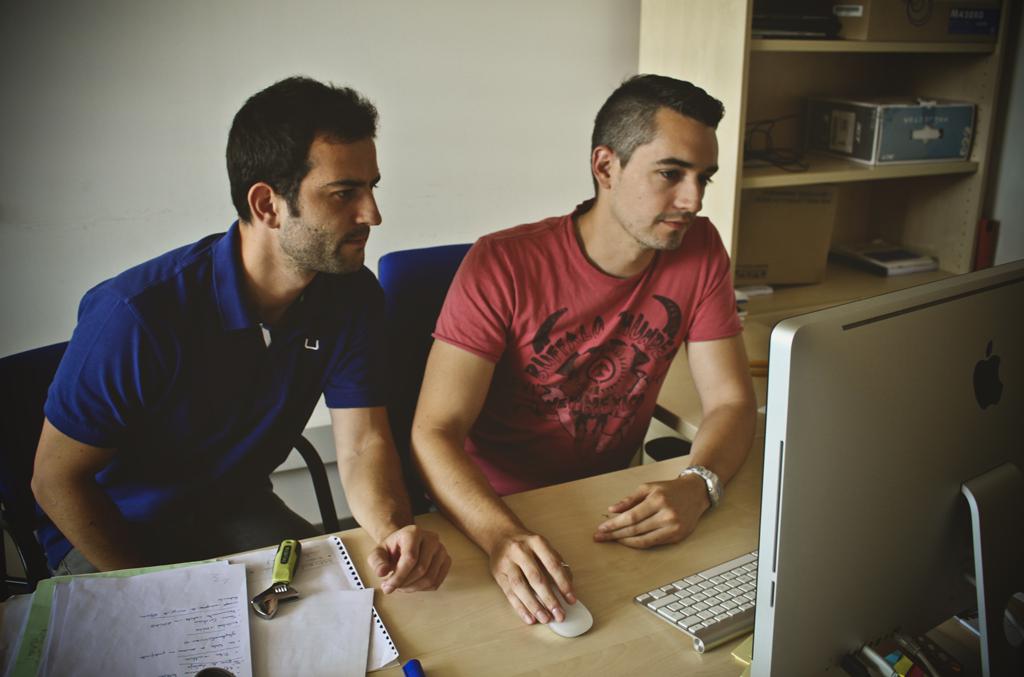
The main goal of this team is to research and support research whenever software development or data analytics are involved in the process. To achieve this, one of the most important tasks carried out is the participation in projects in which we collaborate with companies or other research groups. These collaborations are focused on topics such as BigData, Machine Learning, Internet analysis, social networks, distributed computing, new technologies in education, etc. The levels of collaboration range from small contributions to local companies or research groups to international projects.
The other task that we carry out in the BIFI is to support those researches that are being carried out; improving and optimizing programs that already exist, and conducting consulting work on the best technologies and techniques for development.
Relevant publications
- Targeted Community Merging provides an efficient comparison between collaboration clusters and departmental partitions. F J Bauza, G Ruiz-Manzanares, J Gómez-Gardeñes, A Tarancón, D Íñiguez, Targeted Community Merging provides an efficient comparison between collaboration clusters and departmental partitions, Journal of Complex Networks, Volume 11, Issue 2, April 2023, cnad012, https://doi.org/10.1093/comnet/cnad012
- Analysis of the evolution and collaboration networks of citizen science scientific publications. Pelacho, M., Ruiz, G., Sanz, F. et al. Analysis of the evolution and collaboration networks of citizen science scientific publications. Scientometrics 126, 225–257 (2021). https://doi.org/10.1007/s11192-020-03724-x
- Leaders among the leaders in Economics: a network analysis of the Nobel Prize laureates. José Alberto Molina, David Iñiguez, Gonzalo Ruiz & Alfonso Tarancón (2021) Leaders among the leaders in Economics: a network analysis of the Nobel Prize laureates, Applied Economics Letters, 28:7, 584-589, DOI: 10.1080/13504851.2020.1764478
- Use of open data to improve automobile insurance premium rating. Blesa, D. Iñiguez, R. Moreno, G. Ruiz. International Journal of Market Research 1 – 21 (2019). DOI: 10.1177/1470785319862734.
- Analyzing the potential impact of BREXIT on the European research collaboration network” F. Bauzá, G. Ruiz-Manzanares, L. Pérez-Sienes, A. Tarancón, D. Íñiguez and J. Gómez-Gardeñes. “. Chaos: An Interdisciplinary Journal of Nonlinear Science 30, 063145 (2020); DOI: 10.1063/1.5139019.
- Identification of risk features for complication in Gaucher”s disease patients: A machine learning analysis of the Spanish registry of Gaucher disease. M.M. Andrade-Campos et al. Orphanet Journal of Rare Diseases. 15 – 1, pp. 256 [11 pp]. 2020. ISSN 1750-1172. DOI: 10.1186/s13023-020-01520-7.
- Analysis of academic productivity based on Complex Networks. September 2015, R. Álvarez, E. Cahué, J. Clemente-Gallardo, A. Ferrer, D. Íñiguez, X. Mellado, A. Rivero, G. Ruiz, F. Sanz, E. Serrano, A. Tarancón, Y. Vergara. Scientometrics, September 2015, Volume 104, Issue 3, pp 651-672.
- RRLab: Remote Reality Laboratory to teach mechanics in schools. November 2013, Elisa Cauhé, Alfredo Ferrer, Gonzalo Ruiz, David Íñiguez, Alfonso Tarancón. Chapter 6 of the book “IT Innovative Practices in Secondary Schools: Remote Experiments”, Published by Deusto in 2013. ISBN: 978-84-15772-01-9
- Hadoop Cloud SaaS access via WS-PGRADE adaptation. November 2012, Elisa Cauhé, Arturo Giner, Jaime Ibar, Gonzalo Ruiz, Ruben Vallés. 6th IBERIAN GRID INFRASTRUCTURE CONFERENCE PROCEEDINGS Pages: 161-172 Published: 2013
- Heterogeneous networks do not promote cooperation when humans play a Prisoner‘s Dilemma. 8th June 2012, Carlos Gracia-Lázaro, Alfredo Ferrer, Gonzalo Ruiz, Alfonso Tarancón, José A. Cuesta, Angel Sánchez, and Yamir Moreno. PNAS, Vol. 109, no. 32.
- OptiWeb: An optimization application for steel cut industries ported to the Grid in the framework of PireGrid project. 5th May 2011, “Proceedings of the 5th IBERGRID. ISBN: 978-84-9745-884-9”
- Structural and Dynamical Patterns on Online Social Networks: The Spanish May 15th Movement as a Case Study. 30th July 2011, Javier Borge-Holthoefer, Alejandro Rivero, Íñigo García, Elisa Cauhé, Alfredo Ferrer, Darío Ferrer, David Francos, David Íñiguez, María Pilar Pérez, Gonzalo Ruiz, Francisco Sanz, Fermín Serrano, Cristina Viñas, Alfonso Tarancón, Yamir Moreno . PLoS ONE 6(8): e23883, 2011.
Main research projects
Over the last years, we have developed numerous technology transfer projects and initiatives, including:
- Collaboration with various companies in the implementation of advanced technologies such as artificial intelligence, data analytics, and Big Data, to enhance their competitive advantage in a constantly evolving environment. In this context, the Aragon Supercomputing Center (CESAR) continues to play a key role in strengthening the Aragon DIH (Digital Innovation Hub), which focuses on HPC-Cloud and cognitive systems applied to smart manufacturing, robotics, and logistics processes.
- Development of the OSTEOPAI project, “Development of a Predictive Model for Predisposition to Bone Mineral Density Loss using Artificial Intelligence Techniques,” within the framework of the Ecological Transition and Digital Transition Projects of the Ministry of Science and Innovation.
- “Prediction of impacts on the arrival and unloading of ships in seaports” within the framework of the call for the promotion of the circular economy and business projects in Aragon. This project developed for Kaira Digital S.L., aims to create a prototype IT platform that will generate a list of potential events that could affect the arrival of ships and the unloading of cargo in the ports of Valencia, Sagunto, Barcelona, and Algeciras.
- Participation in the organization of the “Secure the Valley” hackathon, an event organized by the Government of Aragon, focused on security, specifically, on three key aspects: machine learning, IoT devices, and human factor.
- Expansion of CESAR with cutting-edge infrastructure through the incorporation of next-generation GPUs, specifically designed to enhance advanced artificial intelligence and deep learning applications. This development will allow CESAR to offer faster and more efficient computing capabilities, essential for addressing complex problems in sectors such as scientific research, industry, and digital services.
- Development of the automated route generation algorithm for the SmartWastePickUp project in collaboration with Distromel. This project aims to automate and optimize the generation of urban waste collection routes, integrating the results of the collaboration into a model.
- Development of an expert search engine for the Website of the Spanish node (NCC Spain) of the EuroCC2 project, designed to find different experts in the areas specified by users through a free-text search.
- Collaborations with various academic institutions and public administrations within the framework of EuroCC2, including, for example, the implementation of a specific testbed for these entities, offering a number of hours of free access to the CESAR infrastructure and technical support for conducting experiments.
- Development of a Web platform for conducting collective experiments dedicated to the study of human behavior. This platform is used to develop numerous experiments based on Game Theory, including the largest experiment conducted to date with over 1,300 participants playing in real time, from which important conclusions were drawn. Over the past few years, we have improved the platform to analyze different parameters and variables related to collective human behavior.
- The spin-off company Kampal Data Solutions, whose roots lie in this research line, has celebrated its tenth anniversary. Kampal Data Solutions collaborates closely with various research groups at BIFI and at the University of Zaragoza on national and European projects. Kampal continues to develop new products and services and bring innovative and advanced solutions to market, primarily related to data science and artificial intelligence.
High Performance Computing (HPC)
Head of the Research Line:
David Íñiguez Dieste
Researchers:
Daniel Martínez Cucalón
John Díaz Laglera
Alfonso Tarancón Lafita
SUMMARY
The High Performance Computing and Cloud Computing (HPC-Cloud) group is structured around the following lines of work:
- The participation in national and international projects related to HPC and Cloud technologies, as well as in discussion forums and integration of these technologies both in research and in companies.
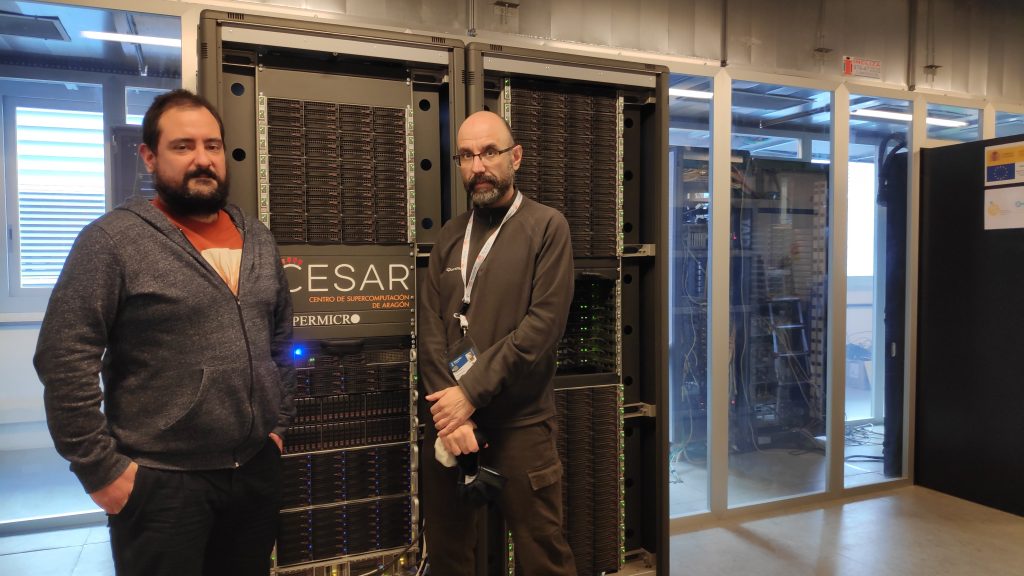
- The maintenance and support of BIFI’s supercomputing infrastructures, housed in the Aragón Supercomputing Center (CESAR). The group’s staff has extensive experience in management (operation, monitoring, accounting…) and support to users of large calculation systems for scientific use, as well as in the design and maintenance of data centers. The center houses two massively parallel supercomputers (CIERZO / CAESARAUGUSTA (III) and MEMENTO), the COLOSSUS cloud infrastructure, as well as other computing and data storage infrastructures.
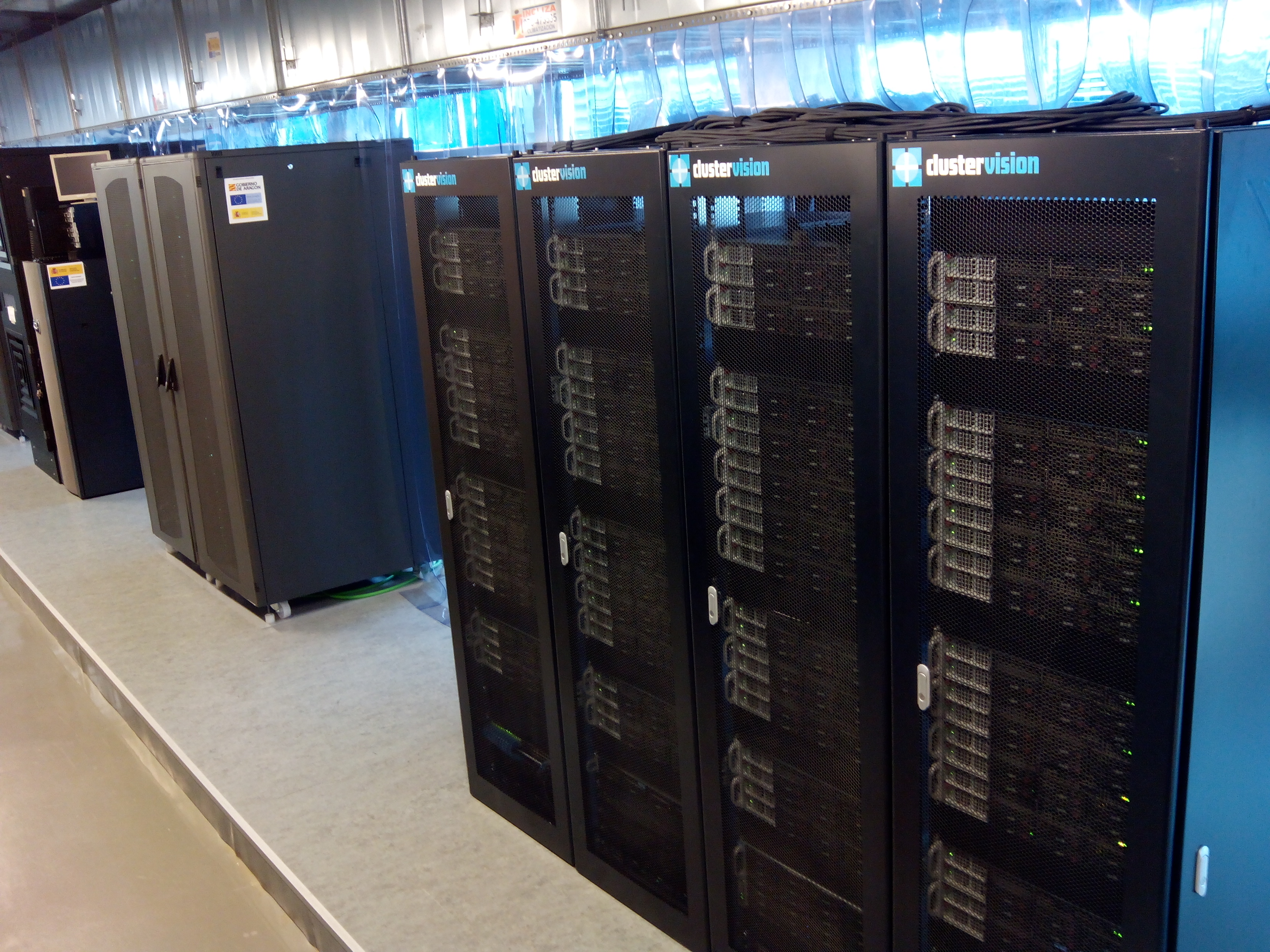
- To offer a quality calculation and storage service for Institute researchers and other external users. The calculation systems we manage offer several million hours of calculation and hundreds of terabytes of storage annually, both to BIFI researchers and their collaborators, as well as to external users through the Spanish Supercomputing Network, the Hosted Clusters program and others. services provided.
- Other services: the porting, optimization and parallelization of applications. As an additional service to the basic support offered in the use of our supercomputers, we collaborate with our users to help them migrate and streamline their codes in the HPC environment.
- To serve as a test bed for Spanish and European companies and SMEs that seek the adoption of new technologies to improve their businesses, offering computational resources under the IaaS (Infrastructure as a Service) paradigm, as well as collaborating in the development and integration of applications business to the cloud.
- Training and dissemination. The group actively participates in these types of activities, teaching courses and tutorials, directing TFG / TFMs, tutoring company practices, managing guided visits to our facilities …
- To participate in the main supercomputing networks at national and European level: RES (Red Española de Supercomputación), Ibergrid (Spain and Portugal) and EGI-FedCloud, which is one of the largest distributed infrastructures worldwide.
Main research projects
1.- EuroCC. Creation of a European network of supercomputing centers at the service not only of research but also of companies. The project aims to promote national strengths in HPC competencies and fill existing gaps.
2.- EOSC-Synergy. Its objective is to expand the capabilities of EOSC (European Open Science Cloud) by taking advantage of the experience, effort and resources of national digital infrastructures funded with public funds.
3.- Cloudflow. European project in collaboration with the companies Nabladot and Biocurve. Improvement of the biomass boiler manufacturing process through adaptation of CFD (Computational Fluid Dynamics) software and deployment on the CloudFlow platform.
4.- FORTISSIMO. European project in collaboration with the company Schnell Software. Reinforcement cutting optimization in Cloud Computing environment.
5.- FORTISSIMO 2. European project focused on promoting the use of Cloud and Big Data technologies by companies, in collaboration with SMEs Nabladot and Kliux (in addition to the cloud provider Gompute).
5.- CloudSME (Simulation for manufacturing & engineering). European project in collaboration with the companies Inycom / Podoactiva. Migration of the 3D scanning system and template design to the CloudSME platform.
7.- SCC-Computing: establishment of a strategic collaboration with computer experts from China to develop the next calculation systems beyond Tianhe-1A (most powerful supercomputer in the world according to the top500 ranking in November 2010).
8.- EGI-Engage
9.- SCI-BUS (Scientific gateway Based User Support)
10.- AraGrid
11.- EGI-InSPIRE (European Grid Infrastructure)
12.- PireGrid
Special Purpose Computers
Head of the Research Line:
Sergio Pérez Gaviro
Researchers:
Andrés Cruz Flor
Luis Antonio Fernández Pérez (UCM)
Antonio Gordillo Guerrero (UNEX)
David Iñiguez Dieste
Víctor Martín Mayor(UCM)
Javier Moreno Gordo
Juan Jesús Ruiz Lorenzo (UNEX)
Alfonso Tarancón Lafita
SUMMARY
Computers have become an essential tool in our quotidian lives. Very simple daily mundane activities as train tickets booking or sending a message to someone require the use of conventional computers. Of course, they also play a very important role in more difficult tasks, such as bank transfers or power grid management for instance. On the other hand, computers have also made possible many advances in Science and nowadays are patently present in a very wide set of different scientific areas. Indeed, many institutions around the World spend a huge amount of money and human effort to build clusters of computers (see for example, www.top500.org/lists/ for a detailed ranked list of the most powerful supercomputers in the World).
However, for some specific problems, conventional computers are not enough. They would spend thousands of years to perform some particular calculations. So in the framework of supercomputing one finds the Special Purpose Computers, which are developed and designed to perform some specific computing-intensive calculation. The development of this kind of supercomputers is in fact the objective of this research line.
Thanks to a very successful scientific collaboration between researchers from BIFI and the Universidad de Zaragoza, Universidad Complutense de Madrid, Universidad de Extremadura, Università degli Studi di Roma “La Sapienza” and Università di Ferrara, the Janus supercomputer was born in 2008. It is a modular, massively parallel, and reconfigurable FPGA-based computing system for High Performance Scientific Computing. Its reconfigurable architecture permits Janus to afford different scientific computational applications, as in Physic, in Chemistry or in Biology. So far, the Janus Collaboration focused its efforts on the study and simulation of spin glasses, paradigm of complex systems.
 Janus is composed by 16 boards. On each board, a bidimensional 4×4 grid of FPGA-processors is located and linked obeying periodic boundary conditions. Each of these processors is called SP (Simulation Processor) and carries on the simulations. A 17th FPGA is settled in the middle acting as a crossbar and called IOP (Inpu/Output Processor), in charge of all internal connections and external communications. All FPGA modules are Xilinx Virtex4-LX200.
Janus retired in 2020 after 12 years of non-stop activity. It is currently found as an exhibition article in the hall of the Faculty of Sciences of the University of Zaragoza.

The Janus II Special Purpose Computer is the new generation supercomputer located at BIFI from 2013. Following the same successful Janus philosophy, JanusII is composed again by 16 boards. On each board, 16 latest generation FPGA processors (Xilinx Virtex-7 XC7VX485T FPGA) are located and linked obeying periodic boundary conditions. They are called SP’s from “Simulation Processor”, since they will be in charge of the simulations. All SP’s on each board are controlled by a full fledged computer that we call CP (Control Processor), running the Linux operating system. These CP’s configure all FPGA processors for the simulations, controlling and monitoring their status. The CP uses a commercially available Computer-on-Module system (COM), based on an Intel Core i7 processor; it connects via the PCIe interface to a so-called Input-Output-Processor (IOP) built inside yet another FPGA. The IOP actually manages all connections to all SP’s, controlling the configuration procedure and their operation, and monitoring their status. The Janus II architecture includes also improved communications, permitting the interconnection between all boards, and it enlarges 100 times the memory available.

JanusII was built thanks to FEDER funds: Ministerio de Economía y Competitividad (Gobierno de España), Gobierno de Aragón, European Union.

More information: http://www.janus-computer.com
RELEVANT PUBLICATIONS
1.-Janus II: a new generation application-driven computer for spin-system simulations. Janus Collaboration: M. Baity-Jesi; R. A. Baños; A. Cruz; L. A. Fernandez; J. M. Gil-Narvion; A. Gordillo-Guerrero; D. Iñiguez; A. Maiorano; F. Mantovani; E. Marinari; V. Martin-Mayor; J. Monforte-Garcia; A. Muñoz Sudupe; D. Navarro; G. Parisi; S. Perez-Gaviro; M. Pivanti; F. Ricci-Tersenghi; J. J. Ruiz-Lorenzo; S. F. Schifano; B. Seoane; A. Tarancon; R. Tripiccione; D. Yllanes. Ref.: Computer Physics Communications 185; 550-559 (2014).. DOI: https://doi.org/10.1016/j.cpc.2013.10.019¡
2. An FPGA-Based Supercomputer for Statistical Physics: the Weird Case of Janus. Janus Collaboration: R. A. Banos; A. Cruz; L. A. Fernandez; J. M. Gil-Narvion; A. Gordillo-Guerrero; M. Guidetti; D. Iniguez ; A. Maiorano; F. Mantovani; E. Marinari ; V. Martin-Mayor; J. Monforte-Garcia; S. Perez-Gaviro A. Muñoz Sudupe; D. Navarro; G. Parisi; M. Pivanti; S. Perez-Gaviro; F. Ricci-Tersenghi; J. J. Ruiz-Lorenzo; S. F. Schifano; B. Seoane; A. Tarancon; R. Tripiccione; D. Yllanes. Ref: Book Chapter in Book: “High-Performance Computing using FPGAs”; pp 481-506 (2013). University of Glasgow; Publisher: Springer-Verlag, New York. DOI: https://doi.org/10.1007/978-1-4614-1791-0_16
3. Spin glass simulations on the Janus architecture: A desperate quest for strong scaling. Janus Collaboration: M. Baity-Jesi; R.A. Baños; A. Cruz; L.A. Fernandez; J.M. Gil-Narvion; A. Gordillo-Guerrero; M. Guidetti; D. Iñiguez; A. Maiorano; F. Mantovani; E. Marinari; V. Martin-Mayor; J. Monforte-Garcia; A. Muñoz-Sudupe; D. Navarro; G. Parisi; S. Perez-Gaviro; M. Pivanti; F. Ricci-Tersenghi; J. Ruiz-Lorenzo; S.F. Schifano; B. Seoane; A. Tarancon; P. Tellez; R. Tripiccione ; D. Yllanes. Ref: Book Chapter in Conference proceedings book: “Euro-Par 2012: Parallel Processing Workshops”. Lecture Notes in Compouter Science; Volume 7640; 2013; Pages 528-537. Publisher: Springer-Verlag, Berlin Heidelberg. Part of the Lecture Notes in Computer Science book series (LNCS, volume 7640) DOI: https://doi.org/10.1007/978-3-642-36949-0_61
4. Reconfigurable computing for Monte Carlo simulations: results and prospects of the Janus project. Janus Collaboration: M. Baity-Jesi, R. A. Banos, A. Cruz, L. A. Fernandez, J. M. Gil-Narvion, A. Gordillo-Guerrero, M. Guidetti, D. Iniguez, A. Maiorano, F. Mantovani, E. Marinari, V. Martin-Mayor, J. Monforte-Garcia, A. Munoz Sudupe, D. Navarro, G. Parisi, M. Pivanti, Perez-Gaviro, F. Ricci-Tersenghi, J. J. Ruiz-Lorenzo, S. F. Schifano, B. Seoane, A. Tarancon, P. Tellez, R. Tripiccione, D. Yllanes. Ref: The European Physical Journal Special Topics 210, 33 (2012). DOI: https://doi.org/10.1140/epjst/e2012-01636-9
5. JANUS: an FPGA-based System for High Performance Scientific Computing. Janus Collaboration: F. Belletti, M. Cotallo, A. Cruz, L. A. Fernandez, A. Gordillo, A. Maiorano, F. Mantovani, E. Marinari, V. Mart\’in-Mayor, A. Muñoz-Sudupe, D. Navarro, S. Perez-Gaviro, M. Rossi, J. J. Ruiz-Lorenzo, S. F. Schifano, D. Sciretti, A. Tarancon, R. Tripiccione, J. L. Velasco. Ref: Computing in Science & Engineering 11-1, 48-58 (2009). DOI: https://doi.org/10.1109/MCSE.2009.11
6. Simulating spin systems on IANUS; an FPGA-based computer. Janus Collaboration: F. Belletti; M. Cotallo; A. Cruz; L. A. Fernandez; A. Gordillo; A. Maiorano; F. Mantovani; E. Marinari; V. Martin-Mayor; A. Muñoz-Sudupe; D. Navarro; S. Perez-Gaviro; J. J. Ruiz-Lorenzo; S. F. Schifano; D. Sciretti; A. Tarancon; R. Tripiccione; J. L. Velasco; Ref: Computer Physics Communications 178 (3); p.208-216; (2008). Ver también: arXiv:0704.3573. DOI: https://doi.org/10.1016/j.cpc.2007.09.006
7. Ianus: an Adpative FPGA Computer. Janus Collaboration: F. Belletti; I. Campos; A. Cruz; L. A. Fernandez; S. Jimenez; A. Maiorano; F. Mantovani; E. Marinari; V. Martin-Mayor; D. Navarro; A. Muñoz-Sudupe; S. Perez-Gaviro; G. Poli; J. J. Ruiz-Lorenzo; F. Schifano; D. Sciretti; A. Tarancon; P. Tellez; R. Tripiccione; J. L. Velasco. Ref: Computing in Science & Engineering; January/February 2006; Volume 8; N 1; p.41. DOI: https://doi.org/10.1109/MCSE.2006.9
RESEARCH PROJECTS
1. Janus: Ordenador dedicado de nueva generación. Fondos Feder (2007-2013) & Gobierno de Aragón (2012-2013). IP: Alfonso Tarancón Lafita.
2. BFM2003-08532-C03-01. Simulaciones de Monte Carlo de Sistemas Complejos: sistemas fermiónicos, plegamiento de proteínas y ordenadores dedicados. Ministerio de Ciencia y Tecnología – DGI. 01/12/2003 – 30/11/2006. IP: Alfonso Tarancón Lafita.
3. INF2005-CIEN-016. Tarjeta de desarrollo de FPGA-XILINX. Vicerrectorado de Investigación – Infraestructura, Universidad de Zaragoza. 13/07/2005 – 31/12/2005. IP: Alfonso Tarancón Lafita.
COLLABORATORS
INTERNATIONALS
- Marinari, I. Paga, G. Parisi, F. Ricci-Tersenghi. Università di Roma La Sapienza (Italia)
- Calore, S. F. Schifano, R. Tripiccione. Università di Ferrara (Italia)
- Baity-Jesi. Eawag, Dübendorf (Switzerland)
- Maiorano. Dipartimento di Biotecnologie, Chimica e Farmacia, Università degli studi di Siena (Italia)
- Yllanes. Chan Zuckerberg Biohub, San Francisco (USA)
NATIONALS
- Navarro. Departamento de Ingeniería, Electrónica y Comunicaciones & I3A, Universidad de Zaragoza.
- Gonzalez-Adalid Pemartin, A. Muñoz-Sudupe. Departamento de Física Teórica, Universidad Complutense de Madrid
- Seoane. LISN – Laboratoire Interdisciplinaire des Sciences du Numérique, Orsay (Francia)
CONTACT
Head of the research line:
Carmen Pérez-Llantada
Researchers:
Carmen Pérez-Llantada
M José Luzón
Ignacio Guillén
Oana Maria Carciu
Miguel Ángel Benítez
Rosana Villares
Miguel Ángel Vela
María de los Ángeles Velilla
Sofía Albero Posac
Ana Cristina Vivas
Alberto Vela
SUMMARY
The resources and computational infrastructure of digital media, including social networks, facilitate the creation and exchange of scientific knowledge not only among researchers in the STEM disciplines but also with the broader public. This line of research focuses on Science 2.0, and examines how science is communicated and disseminated on the Internet and social media, and how scientific knowledge is co-constructed through dialogic interactions within the scientific community and between the researchers and other interest groups (science stakeholders). Along these lines, we investigate why researchers need or want to communicate science in the context of Open Access (OA) and Open Science (OS) policies and how researchers perceive these policies and practices. We also investigate the repertoires of digital genres (written and spoken) that researchers currently use to bring science close to diversified audiences and, by this means, contribute to the democratization of knowledge and the promotion and development of scientific literacy and digital literacy in society.
We carry out quantitative and qualitative analyses to understand the construction of knowledge and knowledge dissemination online, to provide empirical descriptions of researchers’ digital literacy development and to identify the rhetorical strategies that scientists use to reach non-specialized audiences using one or more languages. We are also interested in identifying the STEM researchers’ language and communication needs to address them and enhance their communication skills, one of the key skills for the training of novice and experienced researchers according to the European Commission EURAXESS descriptors. At a methodological level, our research involves the use of digital humanities technologies for the analysis of textual data. Our emphasis is on the use of corpus linguistics, linguistic data processing, and small- and large-scale text mining techniques, as well as computational linguistics and ethnomethodological techniques. All these methods allow us to identify trends in multilingual science communication online and assess the use of language and linguistic repertoires to communicate and disseminate science online with and for society.
In addition, our research aligns with several of the Sustainable Development Goals (SDGs) of the United Nations 2030 Agenda, specifically those proposed by the World Federation of Science Journals. These are global warming and what societies can do to adapt to climate change, mental health, science and global health and the global biodiversity crisis. To do this, we use corpus of electronic texts to carry out descriptive characterizations of different genres for communicating science in digital media, with special attention to phraseological, discursive, pragmatic and rhetorical aspects, as well as features of lexical and syntactic complexity, register and discourse style. We also analyse assemblages of digital genres (for example, genre chains, genre systems, and genre ecologies) and the semiotic resources that researchers can use to disseminate science, including both single and multimodal genres and genres in one or more languages. The outcomes of this research is applied to teaching innovation, advising on scientific policies and language policies, as well as training human resources in the STEM fields in professional communication.

RELEVANT PUBLICATIONS
1. Pérez-Llantada, C. (2023). ‘Help us better understand our changing climate’: Exploring the discourse of Citizen Science. Discourse & Communication, 0(0) (online first).
2. Luzón, M.J. (2023). Multimodal practices of research groups in Twitter: An analysis of stance and engagement. English for Specific Purposes, 70, 17-32.
3. Villares, R. (2023). Exploring rhetorical strategies of stance and engagement in Twitter conference presentations. ESP Today, 11(2), 280-301.
4. M Francisco, MÁ Benítez-Castro, E Hidalgo-Tenorio, JL Castro (2023). A semi-supervised algorithm for detecting extremism propaganda diffusion on social media. Pragmatics and Society, 13 (3), 532-554.
5. Pérez-Llantada, C.; Abián, O.; Cadenas-Sánchez, C.; Carciu, O.; Clemente-Gallardo, J.; Erviti, M.C.; Labayen, I.; León, B.; Ollero, A.; Oses Recalde, M.; Rivera, D.; Vela, A.; Velazquez-Campoy, A.; Villares, R.; Vivas Peraza, A.C. (2022). “Digital Science: Sustainable, transformative and transversal. Final report”, Mendeley Data, V1, doi: 10.17632/2yv5brwxg5.1
6. Vivas-Peraza, A. C. (2022). Engaging the public in science crowdfunding: Scientists calling to action through visual and verbal strategies. Visual Review, 9, 1-15.
7. Carciu, O-M., & Villares, R. (2022). Innovation linked with SDGs: Citizen Science projects to foster competencies for participation in the Digital Society. 8th International Conference on Higher Education Advances (HEAd’22), 1223-1230.
8. Luzón, M.J. and Pérez-Llantada, C. (2022). Digital Genres in Academic Knowledge Production and Communication: Perspectives and Practices. Bristol: Multilingual Matters.
9. Luzón M.J. (2022). “Coronavirus explainers” for public communication of science: everything the public needs to know. In Musolff, A., Breeze, R., Kondo, K. and Vilar-Lluch, S. (eds). Pandemic and Crisis Discourse. Bloomsbury Publishing.
10, Pérez-Llantada, C. (2022). Online data articles: The language of intersubjective stance in a rhetorical hybrid. Written Communication, 39(3), 400-425.
11. Pérez-Llantada, C. & M.J. Luzón (2022). Genre Networks. Intersemiotic Relations in Digital Science communication. New York/Oxon: Routledge.
12. Guillén-Galve, I., & Bocanegra-Valle, A. (eds.) (2021). Ethnographies of Academic Writing Research: Theory, Methods, and Interpretation. (Research Methods in Applied Linguistics Series). Amsterdam/Philadelphia: John Benjamins.
MAIN RESEARCH PROJECTS
1. Digital Language and Communication Training for EU Scientists (DILAN). Erasmus + Programme. Project code 2022-1-ES01-KA220-HED-000086749. (2023-2025). P.I.: Carmen Pérez-Llantada
2. Digital genres and Open Science: An analysis of the processes of hybridization, innovation and generic interdiscursivity (PID2019-105655RB-I00), Plan Nacional I+D+i Ministerio de Innovación y Ciencia, (2021-2024). IPs: M José Luzón y Carmen Pérez-Llantada
3. Ecologies of genres and ecologies of languages: An analysis of the dynamics of scientific communication at local, cross-border and international levels (FFI2015-68638-R MINECO/FEDER, EU) (2015-2020), Plan Nacional I+D+i Ministerio de Economía y Competitividad y Fondos FEDER. IP: Carmen Pérez-Llantada
COLLABORATORS
Vijay K. Bhatia, the Chinese University of Hong Kong (Hong Kong)
Susan Birch Beecas, Université de Bordeux (France)
Dacia Dressen-Hammouda, Université Clermont Auvergne (France)
Christine B. Feak, University of Michigan (USA)
Christoph A. Hafner, City University of Hong Kong (Hong Kong)
Laura-Mihaela Muresan, Bucharest University of Economic Studies (Romania)
Christine B Tardy, University of Arizona (USA)
Pavel Zemliansky, Oslo Metropolitan University (Norway)
CONTACT
Head of the research line:
Gerardo Sanz Sáiz
Researchers:
Javier López Lorente
Ana Carmen Cebrián Guajardo
Pedro Mateo Collazos
Luis Mariano Esteban Escaño
Miguel Lafuente Blasco
SUMMARY
The research of Stochastic Models group (MODES) is structured around two lines of work:
– Analysis of extreme data with applications in Climatology. The main goal is the development of probabilistic and statistical tools to model extreme observations, especially those related with temperature and precipitation. The analysis of this type of series requires spatio-temporal models, which are developed in a Bayesian framework. The applications focus on the analysis of series in the Ebro valley and Spain but the models can be extrapolated to other regions.
– Predictive models in Medicine. The group has developed statistical models in oncology and gynecology, including online calculators to predict the evolution of patients. We have also built models to be used as decision-aid tools for the management of hospitals. In particular, we have developed a multistate model for predicting hospital and ICU occupancy during a pandemic, such as COVID, which includes a freely available standalone tool. The group also works in the analysis of stochastic models for the logistics of the production process of blood components, in order to minimize expiry rates and maximize freshness.
RELEVANT PUBLICATIONS
1.Bayesian variable selection in Generalized Extreme Value regression: Modeling annual maximum temperature. Castillo-Mateo, J.; Asín, J.; Cebrián, AC.; Mateo-Lázaro, J.; Abaurrea, J. 2023. Mathematics, 11(3) 759.
2.A Multistate model and its standalone tool to predict hospital and ICU occupancy by patients with COVID-19. Lafuente, M, López FJ.; Mateo, P.; Cebrián, AC.; Asín, J.; Moler, JA.; Borque, A.; Esteban, LM.; Pérez, A. and Sanz, G. 2023. Heliyon, 9(2) e13545.
3.Testosterone recovery after androgen deprivation therapy in prostate cancer: building a predictive model. Borque, Á; Estrada, F; Esteban, LM; Gil, MJ; Sanz, G. 2022. The world journal of men’s health, 34,588-598.
4.Spatial Modeling of Day-Within-Year Temperature Time Series: An Examination of Daily Maximum Temperatures in Aragón, Spain. Castillo-Mateo, J.; Lafuente, M.; Asín, J.; Cebrián, AC.; Gelfand, A.; Abaurrea, J.2022. JABES. 27, pp. 487–505.
5.Spatio-temporal analysis of the extent of an extreme heat event. Cebrián, AC.; Asín, J.; Gelfand, A.; Schliep, E; Castillo-Mateo,J; Beamonte, A; Abaurrea, J. 2022. SERRA. 36, pp. 2737–2751.
6.Record tests to detect non-stationarity in the tails with an application to climate change. Cebrián, AC.; Castillo, J.; Asín, J. 2022. SERRA. 36, pp.313–330.
7.Machine Learning Algorithm to Predict Acidemia Using Electronic Fetal Monitoring Recording Parameters. Esteban, J; Castán, B; Castán, S; Chóliz, M; Asensio, C; Laliena, A; Sanz-Enguita, G; Sanz, G; Esteban, LM; Savirón, R. 2022. Entropy, 24, 68.
8.Performance measures of nonstationary inventory models for perishable products under the EWA policy. Gorria, C., Lezaun, M., & López, F. J. 2022. European Journal of Operational Research. 303(3). 1137-1150.
9.Near-Record Values in Discrete Random Sequences. Lafuente, M; Gouet, R; Lopez, FJ; Sanz, G. 2022. Mathematics, 10, 2442.
10.Incorporating a New Summary Statistic into the Min–Max Approach: A Min–Max–Median, Min–Max–IQR Combination of Biomarkers for Maximising the Youden Index. Aznar, R; Esteban, LM.; Sanz, G; Hoyo, R; Savirón, R. 2021. Mathematics, 9, 2497.
11.Analyzing dependence between point processes in time using IndTestPP. Cebrián, AC.; Asín, J. 2021. R JOURNAL. 13 -1, pp. 499 – 515.
12.Long-term spatial modelling for characteristics of extreme heat events JRSS. Series A. Schliep, E.M.; Gelfand, A.; Abaurrea, J.; Asín, J.; Beamonte, MA.; Cebrián, AC.. 2021.Statistics in Society. 84(3), 1070-1092.
13.Forecasting high-frequency river level series using double switching regression with ARMA errors. Cebrián, AC.; Salillas, R. 2021.Water resources Management. 35, pp. 229 – 313.
14.Impact of implementing pathogen reduction technologies for platelets on reducing outdates. Gorria, C., Labata, G., Lezaun, M., López, FJ., Perez Aliaga, AI., & Pérez Vaquero, MÁ. 2020. Vox sanguinis, 115, 167-173.
15.Exact and asymptotic properties of delta-records in the linear drift model. Gouet, R; Lafuente, M; Lopez, FJ; Sanz, G. 2020. JOURNAL OF STATISTICAL MECHANICS: THEORY AND EXPERIMENT. P103201.
16.Statistical Inference for the Weibull Distribution Based on d-Record Data. Gouet, R; Lopez, FJ; Maldonado, L; Sanz, G. 2020. SYMMETRY-BASEL. 12.
MAIN RESEARCH PROJECTS
- (2022-2024) Project code: TED2021-130702B-I00. Agencia Estatal de Investigación. Modelización y proyección de récords y extremos medioambientales para evaluación del cambio climático. Aplicación en la cuenca del Ebro y en Pirineos. IP: Gerardo Sanz and Ana Carmen Cebrián.
- (2020-2023) Project code: PID2020-116873GB-I00. Agencia Estatal de Investigación. Modelos estocásticos para estimación y predicción en medicina y extremos medioambientales. IP: F. Javier López and Ana Carmen Cebrián
- (2003-). Project code: E46_20R. Gobierno de Aragón. Modelos Estocásticos. Grupo de investigación de referencia DGA
- (2013-2015) Project code: 2013/0386. Diputación Provincial de Zaragoza Desarrollo de un proyecto de producción y difusión de estadística local. IP: F. Javier López and Gerardo Sanz
- 2013. Project code: 2013/0412. Comercial RAFER S.L. Construcción de modelos estocásticos para predecir la evolución a LMA y la respuesta a tratamiento en pacientes con SMD. IP: F. Javier López
COLLABORATORS
Kampal Data Solutions
Manager:
Beatriz Gómez
Team:
Alfredo Ferrer
David Íñiguez
Gonzalo Ruiz
Alfonso Tarancón
Alejandro Rivero
Óscar Fraca
Juan Luis Durán
Teresa García
Luis Miguel Martínez
Alberto García
Javier Fernández
Carlos Tarancón
Désirée González
Web
SUMMARY
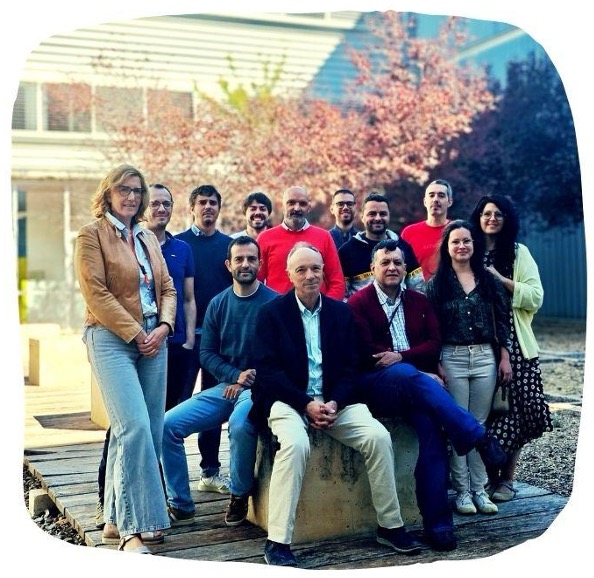
Kampal was founded in 2014 from BIFI as a spin-off of the University of Zaragoza, specializing in the development of advanced solutions for the academic environment, based on advanced statistics and complex network models. Since then, it has experienced sustained growth, both in terms of its human team and its knowledge base, as well as a process of evolution, adapting to market needs. This adaptation has led to specialization in techniques such as Artificial Intelligence, Natural Language Processing, and Data Science.
The work at Kampal combines scientific rigor, technology transfer, and a deep ethical commitment, with the goal of transforming data into useful knowledge for public institutions, private companies, research centers, and scientific entities.
With more than ten years of experience, the multidisciplinary team—primarily composed of physicists, mathematicians, engineers, and data scientists—collaborates on projects where AI is used to interpret complex structures, anticipate risks, analyze collaborative ecosystems, and understand high-impact human and social dynamics.
AREAS OF SPECIALIZATION
-
AI Solutions and Advanced Modeling Creation of models (AI, complex networks, simulations) to solve complex problems in industry, public administration, health, education, etc. This includes solving problems ranging from resource optimization (e.g., rebar cutting) to intelligent file management.
-
Natural Language Processing (NLP) We apply advanced algorithms for automatic classification, knowledge extraction, and understanding human language in large volumes of information.
-
Data Science for Research Data exploitation for performance evaluation and evidence-based strategic decision-making, designed specifically for academic institutions.
-
Collective Intelligence and Social Participation Design of environments where large groups can solve complex problems using consensus algorithms, structural analysis, and social dynamics.
RELEVANT PUBLICATIONS
-
Teresa García-Egea, Alejandro Rivero, Alfonso Tarancón, Carlos Tarancón. The physics of Collective Human Intelligence and opinion propagation on the lattice, Physics Letters A, Volume 522, 2024, 129767, ISSN 0375-9601, https://doi.org/10.1016/j.physleta.2024.129767.
-
Gonzalo, A., Sanz-García, F., Pelacho, M., Tarancón, A., Rivero, A., Varela, O. and Moreno, A. (2023) ‘Collective Intelligence to Find Solutions to the Challenges Posed by the Sustainable Development Goals’, Citizen Science: Theory and Practice, 8(1), p. 47.
-
F J Bauza, G Ruiz-Manzanares, J Gómez-Gardeñes, A Tarancón, D Íñiguez, Targeted Community Merging provides an efficient comparison between collaboration clusters and departmental partitions, Journal of Complex Networks, Volume 11, Issue 2, April 2023, cnad012, https://doi.org/10.1093/comnet/cnad012
-
F. Bauzá, G. Ruiz-Manzanares, L. Pérez-Sienes, A. Tarancón, D. Íñiguez, J. Gómez-Gardeñes; Analyzing the potential impact of BREXIT on the European research collaboration network. Chaos 1 June 2020; 30 (6): 063145. https://doi.org/10.1063/1.5139019
-
J. Clemente-Gallardo, A. Ferrer, D. Íñiguez, A. Rivero, G. Ruiz, A. Tarancón. Do researchers collaborate in a similar way to publish and to develop projects?, Journal of Informetrics, Volume 13, Issue 1, 2019, Pages 64-77, ISSN 1751-1577, https://doi.org/10.1016/j.joi.2018.11.004.
-
Cuesta JA, Gracia-Lázaro C, Ferrer A, Moreno Y, Sánchez A. Reputation drives cooperative behaviour and network formation in human groups. Sci Rep. 2015 Jan 19;5:7843. doi: 10.1038/srep07843. PMID: 25598347; PMCID: PMC4297950.
-
Gracia-Lázaro C, Ferrer A, Ruiz G, Tarancón A, Cuesta JA, Sánchez A, Moreno Y. Heterogeneous networks do not promote cooperation when humans play a Prisoner’s Dilemma. Proc Natl Acad Sci U S A. 2012 Aug 7;109(32):12922-6. doi: 10.1073/pnas.1206681109. Epub 2012 Jul 6. PMID: 22773811; PMCID: PMC3420198.
-
José Alberto Molina & Alfredo Ferrer & J. Ignacio Giménez-Nadal & Carlos Gracia-Lázaro & Yamir Moreno & Angel Sánchez, 2019. “Intergenerational cooperation within the household: a Public Good game with three generations,” Review of Economics of the Household, Springer, vol. 17(2), pages 535-552, June.
MAIN PROJECTS

The following highlights Kampal’s most representative projects in the context of research, data science, and technology transfer:
-
AI for Nuclear Safety — Consejo de Seguridad Nuclear (Nuclear Safety Council) Kampal developed a system based on AI and NLP that analyzes operational experiences from nuclear power plants to anticipate risks, detect patterns, and improve security in critical facilities.
-
AI Against School Bullying — Government of Aragon Through Kampal Schools, thousands of students have participated in a system capable of detecting bullying dynamics through the analysis of social networks in educational centers.
-
Optimization of Industrial Processes — Schnell We designed an advanced algorithm based on complex systems, Monte Carlo, and AI that optimizes the cutting of metal bars, reducing waste and improving industrial machinery efficiency.
-
File Management System — Government of Aragon In collaboration with Grupo Oesía, Kampal developed an AI system for advanced file management, improving efficiency, citizen service, and internal processes of the Public Administration.
-
Knowledge Finder — University of Zaragoza and University of Castilla La Mancha An intelligent engine that connects scientific production, visualizes collaboration networks, and boosts knowledge transfer from the university to society.
-
Impact of COVID-19 on Parkinson’s Patients — Spanish Federation of Parkinson Kampal analyzed over 600 surveys using advanced complex network and statistical techniques, identifying the physical, emotional, and socioeconomic impact of the pandemic. The study allowed for the redesign of support lines for the most vulnerable profiles.
-
LifeWatch ERIC — European Biodiversity Project Kampal Research was integrated into this European infrastructure to analyze scientific networks and research patterns in biodiversity, contributing to large-scale sustainability and open science policies.
-
AI for Gaucher Disease — FEETEG Kampal developed a large-scale predictive model that allowed for the evaluation of the probability of developing other pathologies in Gaucher patients, demonstrating the scalability of AI models applied to rare diseases.
-
COP25 Climate Summit — Student Participation and Proposals for SDGs Kampal coordinated a project involving nearly 1,000 Secondary Education students to generate concrete proposals aimed at two Sustainable Development Goals (SDGs): SDG 6 (Clean Water and Sanitation) and SDG 13 (Climate Action). The initiative promoted collective reflection and the structured analysis of solutions for current climate challenges.
-
Collective Intelligence Projects with the University of Zaragoza
-
DGA Collective Intelligence – Collaborative Consultation on Reducing Bureaucratic Workload in Teaching Duties.
-
CONVIVEN-CI-IA. Learning of socio-emotional competencies for cyber-coexistence through the integration of AI + Collective Intelligence (CI) tools in educational centers.
-
Citizen Consultation of the Government of Aragon based on Collective Intelligence: “Strategies for work-life balance and co-responsibility in Aragonese families.” University of Zaragoza + LAAAB.
-
“What do and should caring educational centers do? Challenges of integral educational care in Spain: Construction from collective intelligence.” Edelvives Foundation Chair of Integral Educational Care.
-
CI. Application in collaborative environments for problem solving. Funding entity(ies): United States Foreign Trade Institute Chair of Advanced Intelligence.
-